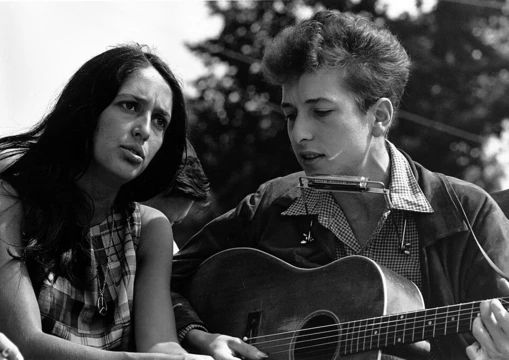
Cat Stevens
British singer-songwriter who converted to Islam and later released new music with spiritual themes.

Wikipedia / Wikimedia Commons
Cat Stevens, born Steven Demetre Georgiou, is a British singer-songwriter and musician known for his folk, rock, and pop music. He has sold over 60 million records and later converted to Islam, adopting the name Yusuf Islam in 1979, before releasing new music in 2006 under that name.
- born
- 21 July 1948
- field
- Singer-songwriter, musician
- nationality
- British
- known_for
- Hit songs including 'Father and Son', 'Wild World', 'Peace Train'; conversion to Islam; return to recording in 2006 with spiritual themes
Lore & Background
Steven Demetre Georgiou was born on 21 July 1948 in Marylebone, London, to a Greek Cypriot father and Swedish mother. He grew up above his parents' restaurant in Soho, developed an early interest in piano, and at 15 began playing guitar after being inspired by the Beatles. He adopted the stage name Cat Stevens in 1966, partly because a girlfriend said he had eyes like a cat. His debut album 'Matthew and Son' (1967) reached the UK top 10, and he toured with artists from Jimi Hendrix to Engelbert Humperdinck.
In 1968, Stevens contracted tuberculosis and spent months in hospital, leading him to question his life and spirituality. He took up meditation, yoga, and read about other religions. After recovering, he released the albums 'Tea for the Tillerman' (1970) and 'Teaser and the Firecat' (1971), both certified triple platinum in the US. His 1972 album 'Catch Bull at Four' reached No. 1 on the US Billboard 200. He converted to Islam in December 1977, adopted the name Yusuf Islam in 1979, and auctioned his guitars for charity in 1979, leaving his musical career for educational and philanthropic causes.
Stevens returned to recording in 2006 with the album 'An Other Cup', his first new studio album in 28 years, released under the name Yusuf Islam and featuring spiritual themes. He later released 'Roadsinger' (2009), 'Tell 'Em I'm Gone' (2014), and 'The Laughing Apple' (2017), the latter using the stage name Yusuf / Cat Stevens for the first time in 39 years. In 2020, he released 'Tea for the Tillerman 2' to celebrate the original album's 50th anniversary, and in 2023, 'King of a Land'.
Reader's Guide
Cat Stevens is significant for his enduring influence as a singer-songwriter, with hits like 'Father and Son', 'Wild World', and 'Peace Train' that have become standards. His 1970s albums achieved multi-platinum status and critical acclaim. His conversion to Islam in 1977 and subsequent departure from secular music for nearly three decades marked a unique trajectory in popular music, followed by a return to pop in 2006. He was inducted into the Rock and Roll Hall of Fame in 2014 and has received honorary doctorates and humanitarian awards. His legacy includes the song 'The First Cut Is the Deepest', which earned ASCAP songwriting awards in 2005 and 2006 after becoming a hit for four artists. Stevens' career reflects a journey from teen pop star to introspective folk-rock icon, then to religious devotion and philanthropy, and finally a return to his musical roots.
Did You Know?
- Stevens has sold over 60 million records and has more than two billion streams.
- He auctioned his guitars for charity in 1979 after converting to Islam.
- His 1972 album 'Catch Bull at Four' went to No. 1 on the US Billboard 200.
- He was inducted into the Rock and Roll Hall of Fame in 2014.
Frequently Asked Questions
Who is Cat Stevens?
Cat Stevens is a British singer-songwriter born in 1948 who became one of the most commercially successful folk and pop artists of the 1970s, selling more than 100 million records worldwide.
What are Cat Stevens's most iconic songs?
His best-known tracks include "Father and Son," "Wild World," and "Peace Train," all of which became defining anthems of the late 1960s and early 1970s.
Why did Cat Stevens leave the music industry?
In the mid-1980s he converted to Islam, took the name Yusuf Islam, and stepped back from performing to devote himself to his faith and humanitarian work.
When did Cat Stevens return to music?
After roughly two decades away from the stage, he came back to secular pop music in 2006, once again performing under the name Cat Stevens.
What is Cat Stevens's birth name?
He was born Steven Demetre Georgiou on 21 July 1948 in London, England, and adopted the stage name Cat Stevens early in his career.
More in Singer-Songwriters 1-21
Spotted an error? Know more?
This is a living reference — every entry is fact-audited, and reader corrections feed straight into our audit queue. Suggest an edit · See this site's audit record