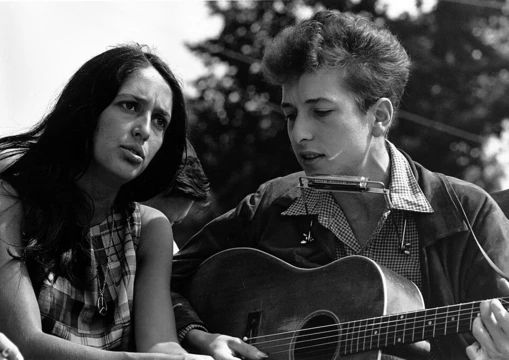
Paul Simon
American singer-songwriter; half of Simon & Garfunkel.

Wikipedia / Wikimedia Commons
Paul Frederic Simon (born October 13, 1941) is an American singer-songwriter and guitarist. He rose to prominence in the 1960s as part of the duo Simon & Garfunkel, whose blend of folk and rock became a soundtrack to the counterculture. As a solo artist, Simon explored genres including gospel, reggae, and soul, and released the acclaimed album Graceland, which incorporated South African influences.
- born
- October 13, 1941
- field
- Singer-songwriter, guitarist
- nationality
- American
- known_for
- Simon & Garfunkel; solo albums including Graceland
Lore & Background
Paul Simon was born in Newark, New Jersey, to Hungarian-Jewish parents. His father was a professor and double bass player; his mother was an elementary-school teacher. The family moved to Queens, New York City, in 1945. Simon met Art Garfunkel in elementary school in 1953, and they began singing together at age 13. In 1957, as teenagers, they recorded "Hey, Schoolgirl" under the name Tom & Jerry, which reached number 49 on the Billboard charts. Simon graduated from Queens College in 1963 and attended Brooklyn Law School for one semester.
After the duo's first album flopped, Simon moved to London in 1965, where he performed in folk clubs and learned finger-picking from Martin Carthy. He wrote "Homeward Bound" and "I Am a Rock" there. The success of the overdubbed single "The Sound of Silence" brought him back to the U.S. to reunite with Garfunkel. They recorded several albums and contributed to the film The Graduate. Their final album, Bridge over Troubled Water (1970), is among the best-selling of all time.
As a solo artist, Simon released albums including Paul Simon (1972), There Goes Rhymin' Simon (1973), and Still Crazy After All These Years (1975). In 1986, he released Graceland, his most successful and acclaimed album, which incorporated South African influences. He wrote a Broadway musical, The Capeman (1998), that was poorly received. His most recent album, Seven Psalms, was released in 2023.
Reader's Guide
Paul Simon's significance lies in his dual career as half of Simon & Garfunkel and as a solo artist who continually expanded his musical palette. With Garfunkel, he created a string of hits that defined the 1960s folk-rock sound, including "The Sound of Silence," "Mrs. Robinson," and "The Boxer." Their final album, Bridge over Troubled Water, remains one of the best-selling albums of all time. As a solo artist, Simon explored gospel, reggae, and soul, and his 1986 album Graceland, which incorporated South African influences, became his most successful and acclaimed work. Simon has won 16 Grammy Awards, including three for Album of the Year, and has been inducted into the Rock and Roll Hall of Fame twice. Two of his works—Sounds of Silence (as part of Simon & Garfunkel) and Graceland—were inducted into the National Recording Registry. He received the Kennedy Center Honors in 2001 and the Library of Congress's Gershwin Prize in 2007. He is also a co-founder of the Children's Health Fund, a nonprofit providing medical care to children.
Did You Know?
- Simon met Art Garfunkel in elementary school in 1953.
- His first song, 'The Girl for Me,' became the 'neighborhood hit' when he was 12 or 13.
- Simon used the pseudonyms 'Jerry Landis,' 'Paul Kane,' and 'True Taylor' for early recordings.
- He is a co-founder of the Children's Health Fund, a nonprofit that provides medical care to children.
Frequently Asked Questions
Who is Paul Simon?
Paul Frederic Simon is an American singer-songwriter and guitarist born on October 13, 1941. He is best known as one half of the 1960s folk-rock duo Simon & Garfunkel and for a prolific solo career that spans multiple musical traditions.
What is Paul Simon most famous for?
He is widely recognized for co-founding Simon & Garfunkel, whose barbershop-harmony folk-rock became a defining soundtrack of the 1960s counterculture. His solo work, particularly the 1986 album Graceland, further cemented his reputation as a genre-boundary-pushing songwriter.
What genres has Paul Simon explored beyond folk-rock?
His solo catalog stretches into gospel, reggae, soul, and South African musical traditions. This willingness to absorb and blend outside influences is a hallmark of his post-Garfunkel career.
What is Graceland and why does it matter?
Graceland is a 1986 solo album in which Simon wove South African rhythms and vocalists into his own songwriting. It became one of his most critically acclaimed and commercially successful records, showcasing his interest in cross-cultural collaboration.
What was Paul Simon's role in Simon & Garfunkel?
Simon served as the primary songwriter and guitarist, while Art Garfunkel contributed his distinctive tenor voice. Their partnership produced a signature close-harmony sound that defined the folk-rock era of the mid-1960s.
More in Singer-Songwriters 1-21
Spotted an error? Know more?
This is a living reference — every entry is fact-audited, and reader corrections feed straight into our audit queue. Suggest an edit · See this site's audit record