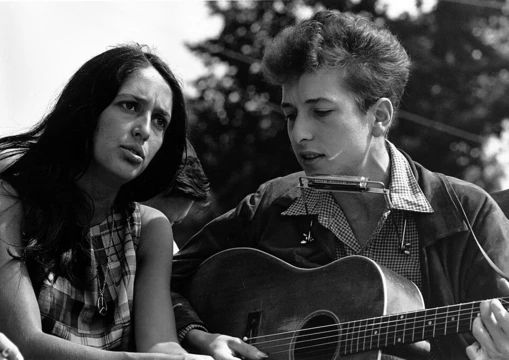
Buffy Sainte-Marie
American singer-songwriter and activist whose Indigenous identity claims were later disputed.
Buffy Sainte-Marie (born Beverley Jean Santamaria; February 20, 1941) is an American singer-songwriter, musician, and social activist. Her work has focused on love, war, religion, mysticism, and issues facing Indigenous peoples of the United States and Canada. She won recognition, awards, and honors for her music, education, and activism, including an Academy Award for Best Original Song in 1983 for 'Up Where We Belong.'
- born
- February 20, 1941, Stoneham, Massachusetts, USA
- field
- Singer-songwriter, musician, social activist
- nationality
- American
- known_for
- Protest songs, Indigenous rights activism, Academy Award-winning song 'Up Where We Belong'
Lore & Background
Sainte-Marie taught herself piano and guitar before attending the University of Massachusetts Amherst. In the early 1960s, she performed in coffeehouses in Yorkville and Greenwich Village as part of the folk scene. Her song 'Universal Soldier' (1964) became a widely acclaimed protest anthem. She appeared on television shows including American Bandstand, Soul Train, and The Tonight Show Starring Johnny Carson, and guest-starred in episodes of The Virginian and Then Came Bronson. From 1976 to 1981, she appeared on Sesame Street to teach that 'Indians still exist,' and in a 1977 episode she breastfed her son, reportedly the first such depiction on television. In 1983, her song 'Up Where We Belong' won the Academy Award and Golden Globe for Best Original Song. She also won a BAFTA film award for the song in 1984.
Reader's Guide
Buffy Sainte-Marie's career spanned folk music, television, and film, with a focus on Indigenous issues. She founded the Nihewan Foundation and the Cradleboard Teaching Project to improve Native American education. However, a 2023 CBC News investigation concluded she was born in the United States of Italian and English descent, contradicting her long-claimed Indigenous Canadian ancestry. Following this, many of her honors were revoked or surrendered, including her Order of Canada membership, Canadian Music Hall of Fame induction, Juno Awards, and Polaris Music Prizes. Her legacy remains complex: celebrated for her musical achievements and activism, yet shadowed by the controversy over her identity claims.
Did You Know?
- Sainte-Marie's song 'Up Where We Belong' won the Academy Award for Best Original Song in 1983.
- She appeared on Sesame Street from 1976 to 1981 to teach that 'Indians still exist.'
- A 2023 CBC News investigation concluded she was born in the United States of Italian and English descent, not Indigenous Canadian.
- She used Apple II and Macintosh computers to record music starting in 1981.
More in Singer-Songwriters 1-21
Spotted an error? Know more?
This is a living reference — every entry is fact-audited, and reader corrections feed straight into our audit queue. Suggest an edit · See this site's audit record